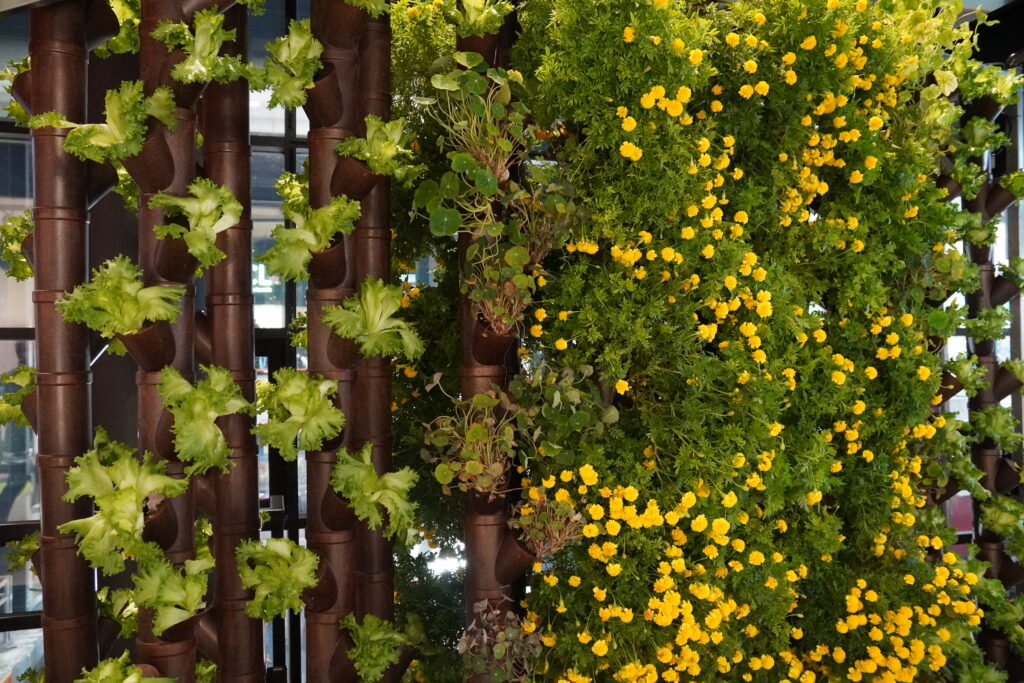
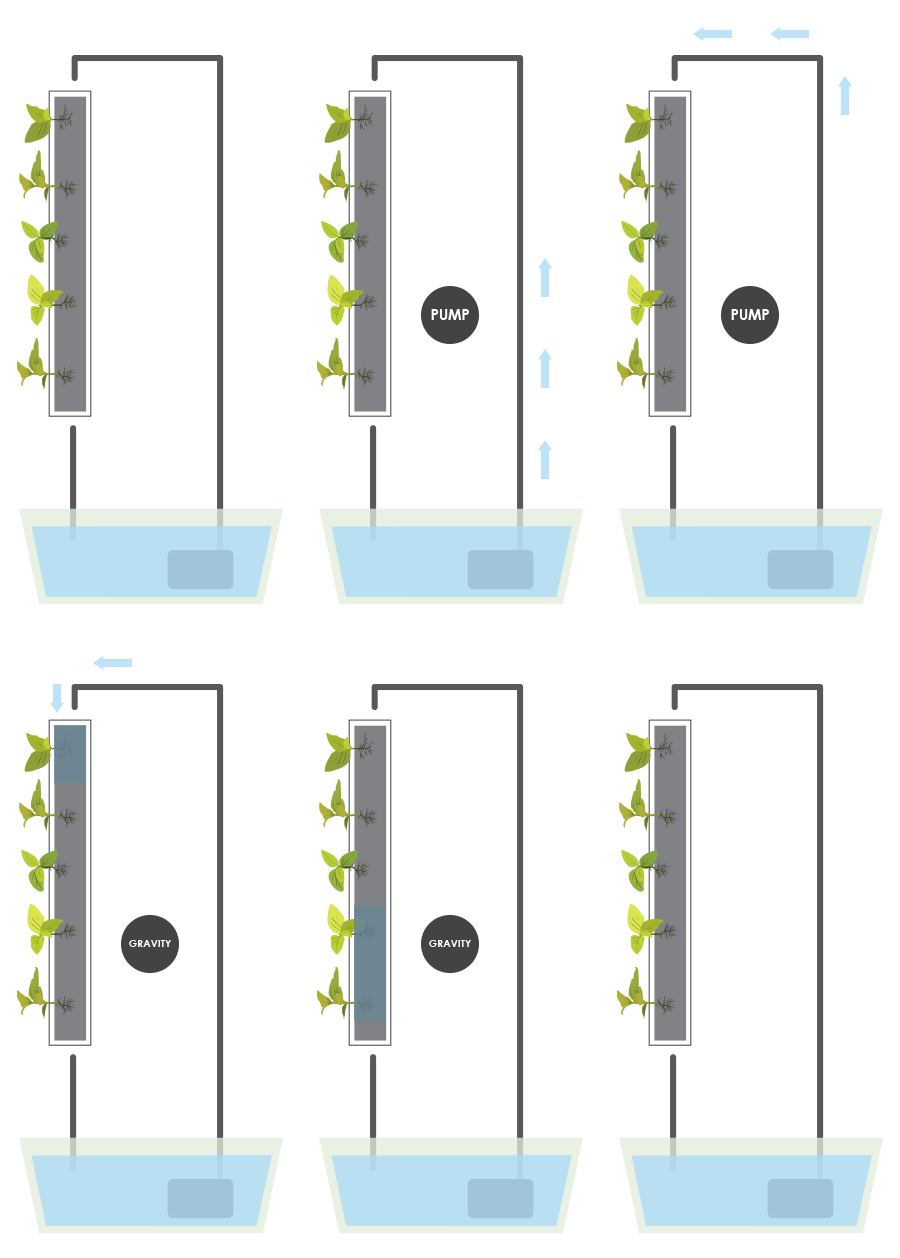
Our setup is a vertical hydroponic tower, where plants grow in individual slots arranged around a central column. A pump circulates water enriched with nutrients from a reservoir at the base up through the tower. The solution flows past the roots, providing them with everything they need –water, oxygen, and nutrients – in precise amounts. This continuous cycle reduces waste, ensures healthy growth, and uses a fraction of the water compared to soil farming.
The system is designed to be modular and scalable, making it suitable for both home use and larger installations. Its vertical orientation maximizes productivity per square meter – a key advantage for dense urban environments.
Our Crops

Marigold
Botanical name: Tagetes spp.

Plant type: Annual herbaceous plant, height ~20–50 cm
Why Marigold?
Marigolds are not only visually striking, they’re also powerful allies in sustainable cultivation systems. Traditionally used in companion planting, they naturally repel harmful insects such as nematodes, whiteflies, and aphids thanks to their root exudates and strong scent. By introducing marigold in a hydroponic tower, we are experimenting with integrating ornamental value and biological pest management in a soilless environment. Marigolds also have cultural resonance: widely recognized across the world, they symbolize vitality and renewal.
Growth Stages of Marigold
- Seed Germination (5–10 days):
Seeds sprout quickly in warm, moist conditions (20–25 °C). - Seedling Stage (10–20 days):
Young plants develop 2–4 sets of true leaves. Sensitive to waterlogging, need good aeration in substrate. - Vegetative Growth (20–40 days):
Plants grow bushier, stems strengthen, and foliage becomes denser. - Flowering Stage (40–60+ days):
Buds form and blooms appear. - Full Bloom & Maintenance (60+ days):
Flowers continue blooming over several weeks. Removing old blooms (deadheading) encourages new flowers.

Tropaeolum
Botanical name: Tropaeolum majus
Common name: Nasturtium
Plant type: Annual flowering herb ~height 15-30 cm
Why Nasturtium?
Nasturtiums are excellent for hydroponic systems because they are fast-growing, have modest nutrient requirements, and their vibrant, edible flowers and leaves can be produced year-round in a controlled environment, free from soil-borne diseases and pests.
Growth stages of Nasturtium
- Seed Germination (5–10 days):
Seeds sprout quickly in warm, moist conditions (15–20 °C). The large seeds are easy to handle and germinate. - Seedling Stage (10–20 days):
Young plants develop their distinctive round cotyledons followed by 2–4 sets of true leaves. - Vegetative Growth (20–40 days):
Plants grow rapidly, becoming bushier or beginning to trail (depending on the variety). Stems strengthen, and foliage becomes dense. - Flowering Stage (40–60+ days):
Buds form at the leaf axils and blooms appear. The first flowers are often ready to harvest. - Full Bloom & Maintenance (60+ days):
Plants continue blooming over many weeks. Regular harvesting of flowers and leaves encourages new growth.
Uses of Marigold and Nasturtium
- Ornamental:widely used in gardens and balconies.
- Biological pest control:their scent and root compounds deter soil-borne pests, though in hydroponics the effect is different.
- Edible flowers in some culinary traditions: mild citrusy flavor, used for garnish and teas. In Nasturtium leaves are also edible with a peppery flavour.
- Natural dye and cosmetic uses:flowers contain carotenoids like lutein, important for human eye health.
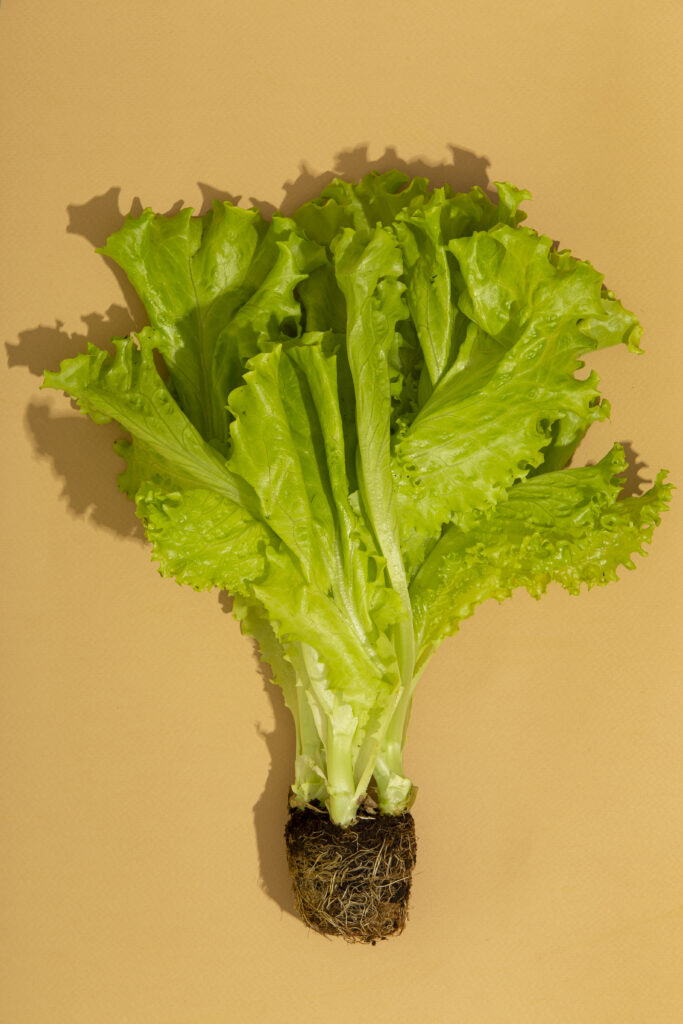
Lettuce
Botanical name: Lactuca sativa
Plant type: Annual leafy vegetable.
Varieties: Romaine, butterhead, loose-leaf
Why Lettuce?
Lettuce is one of the most widely grown leafy greens in hydroponic systems, and for good reason: it has fast growth, low nutrient requirements, and high yield in compact spaces. For urban agriculture, lettuce demonstrates how vertical hydroponics can provide fresh, healthy produce with minimal resources.
By growing lettuce in the tower, the project highlights the direct food potential of hydroponics: clean, pesticide-free, locally produced greens ready for harvest just weeks after transplanting. Its short cycle also makes it ideal for exhibition contexts, as visitors can observe clear changes and harvests within 3 months.
Lettuce in Health and Sustainability
- Nutritional value: High in vitamins A, C, K, and folate; contains antioxidants and dietary fiber.
- Growth speed: 4–6 weeks from transplanting to harvest, depending on variety and light.
- Water efficiency: Hydroponic lettuce uses up to 90% less water than soil-based production.
- Urban freshness: Grown locally, lettuce bypasses long supply chains, reducing food miles and spoilage.
- Reduced inputs: Grows with minimal pesticides or herbicides, improving both environmental and consumer health.
Growth Stages of Lettuce
- Seed Germination (2–5 days):
Seeds sprout quickly in warm, moist conditions (18-22°C). - Seedling Stage (5–14 days):
First true leaves appear. Roots begin developing through the substrate. - Vegetative Growth (14–35+ days):
Rapid growth development. In some varieties, leaves can be harvested here. - Maturation and Harvest (35-50+ days):
Heads or leaf rosettes reach full size. Harvest can be staggered.
Together
By growing marigold, nasturtium and lettuce together, the system demonstrates the dual power of hydroponics: it can produce both fresh food and functional ornamentals in the same compact, urban-friendly structure.
Lettuce provides a direct edible outcome that connects to food systems, nutrition, and daily life.
Marigold and nasturtium contribute aesthetic appeal and ecological benefits (pollinator support, natural pest deterrence).
Together, they tell a broader story: urban hydroponic towers are not just about growing vegetables, but about rethinking how cities integrate food, aesthetics, and ecological resilience in one living system.
Specs of the system
Water
As it is expected, water management in hydroponics is the most crucial aspect of the system. We have a recirculating water system in a tank of 700L. The water is pumped all the way up and then falls done with gravity.
Nutrients
In hydroponics, plants fill their growth needs by a precise nutrient-rich water solution. We are following a typical N-P-K nutrition
Lights
In indoors farming, artificial lightning is an essential parameter for growth since it’s the sun supplement for photosynthesis.
How do are lights work?

Plants depend on light not just for growth, but also for shaping their development. In controlled environments (hydroponics, vertical farms, greenhouses), artificial lighting supplements or replaces sunlight. The right spectrum, intensity, and photoperiod directly affect yield, flavor, and even resistance to disease.
Our lights designed by AURA PROJECT have the following characteristics: