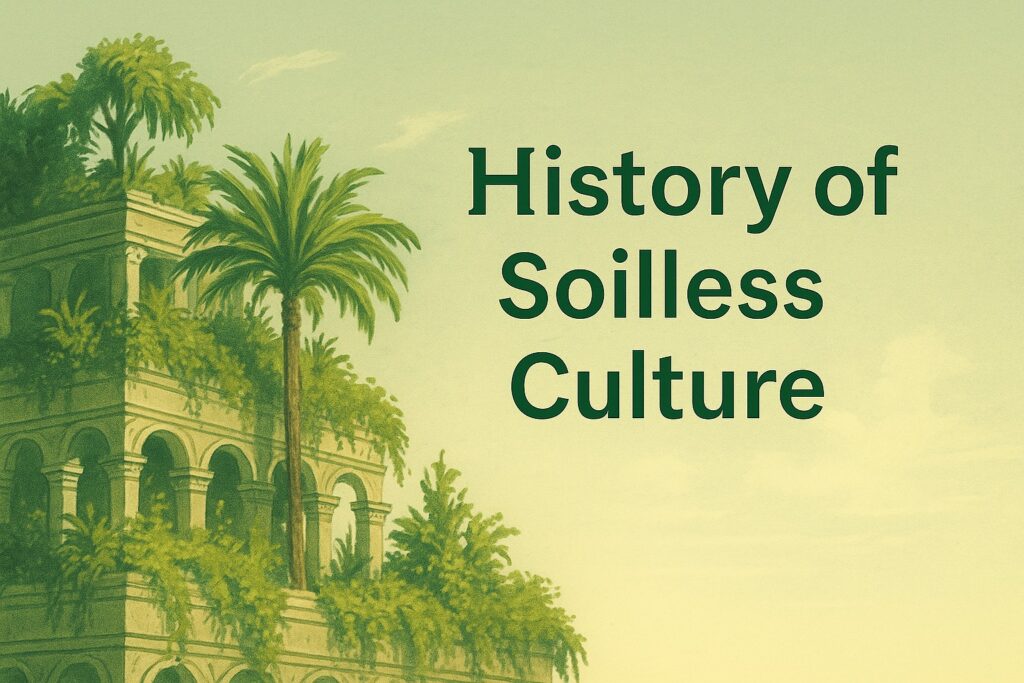
Soilless culture, also known as hydroponics, has a rich history that dates back to ancient civilizations, such as the Hanging Gardens of Babylon and the Floating Gardens in China.
In the 19th century, scientists like Knop and Sachs began experimenting with soilless cultivation techniques, leading to the 1886 patent by Bodington and Phillips for artificial plant culture without soil.
The first commercial soilless farm, Safeway Farm, was established in Shanghai during the 1930s. By 1946, soilless culture was introduced in Japan, further expanding its global reach.
In recent decades, particularly from 1985 to 1995, soilless culture gained significant momentum in mainland China, becoming a key agricultural project.
Today, it plays a vital role in sustainable farming practices worldwide, showcasing continuous innovation in plant cultivation.
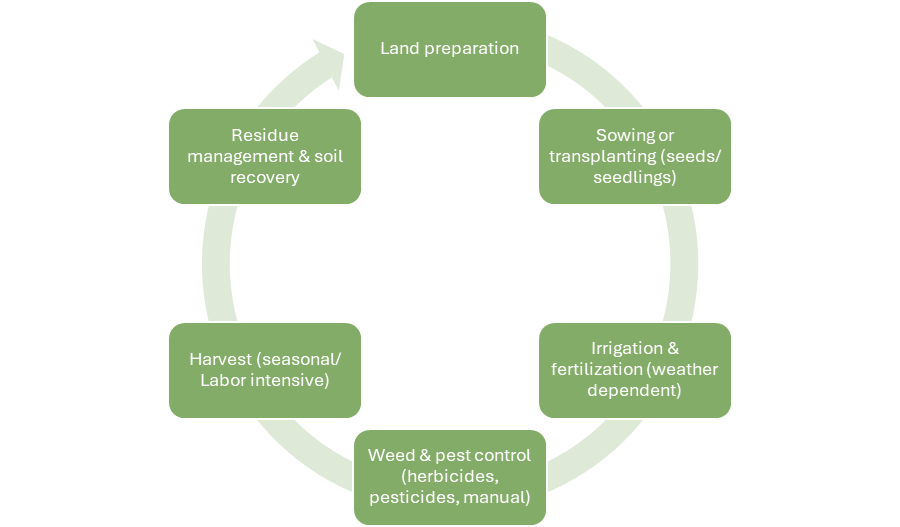
Open field vs Soilless Cultivation
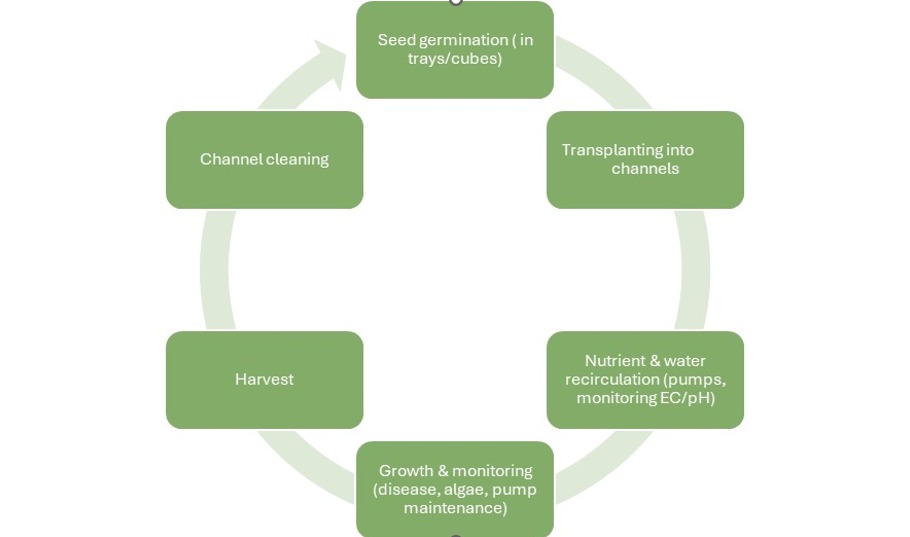
Hydroponic cultivation has advantages and disadvantages
Advantages of Hydroponics over Open-Field Farming
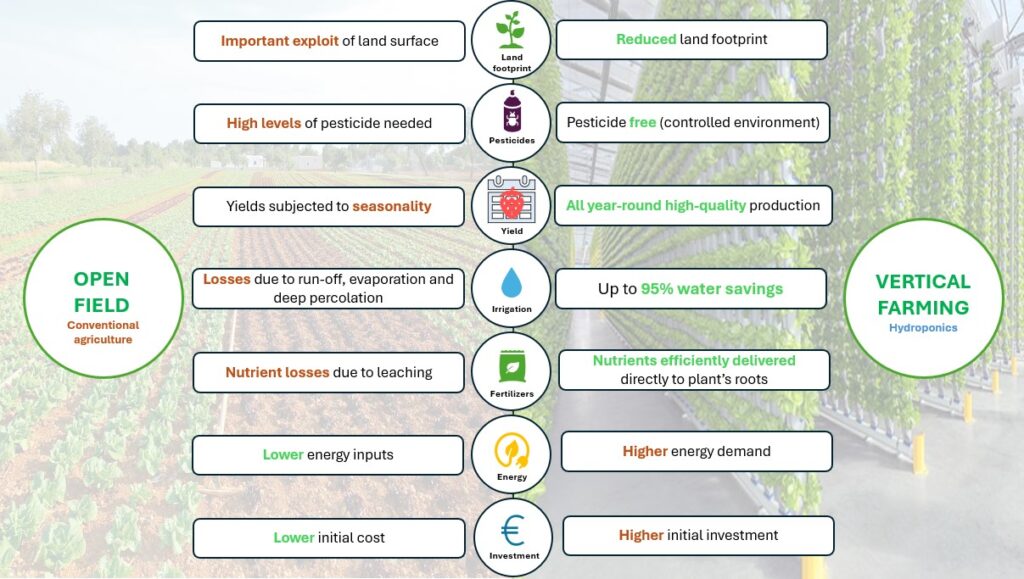
Hydroponics offers significant advantages, primarily through its highly efficient use of resources. It uses up to 70-95% less water by recirculating it in a closed system, drastically reducing waste from evaporation and runoff. This method allows for extreme land efficiency, producing higher yields in a much smaller footprint through vertical stacking, making it ideal for urban areas. Growers benefit from consistent, year-round production that is shielded from weather extremes, droughts, and pests, leading to more reliable harvests of uniform, clean, and high-quality produce. Furthermore, it minimizes environmental impact by nearly eliminating agricultural runoff and reducing the need for pesticides.
Disadvantages of Hydroponics Compared to Open-Field Farming
The main disadvantages of hydroponics revolve around its high initial investment and operational complexity. Setting up a system requires significant capital for equipment like racks, pumps, and controls, alongside ongoing costs for energy to run the system and skilled labor for monitoring and maintenance. It is vulnerable to technical failures; a power outage or a disease outbreak in the water can rapidly affect the entire crop. The range of viable crops is also limited, making it less suitable for large, deep-rooted plants like grains or trees. Finally, the produce can sometimes be perceived as lacking the flavor complexity of soil-grown alternatives, and achieving organic certification can be challenging