“New synergies between man and nature for sustainability | A laboratory for the prototyping of a multi-function hydroponic system”
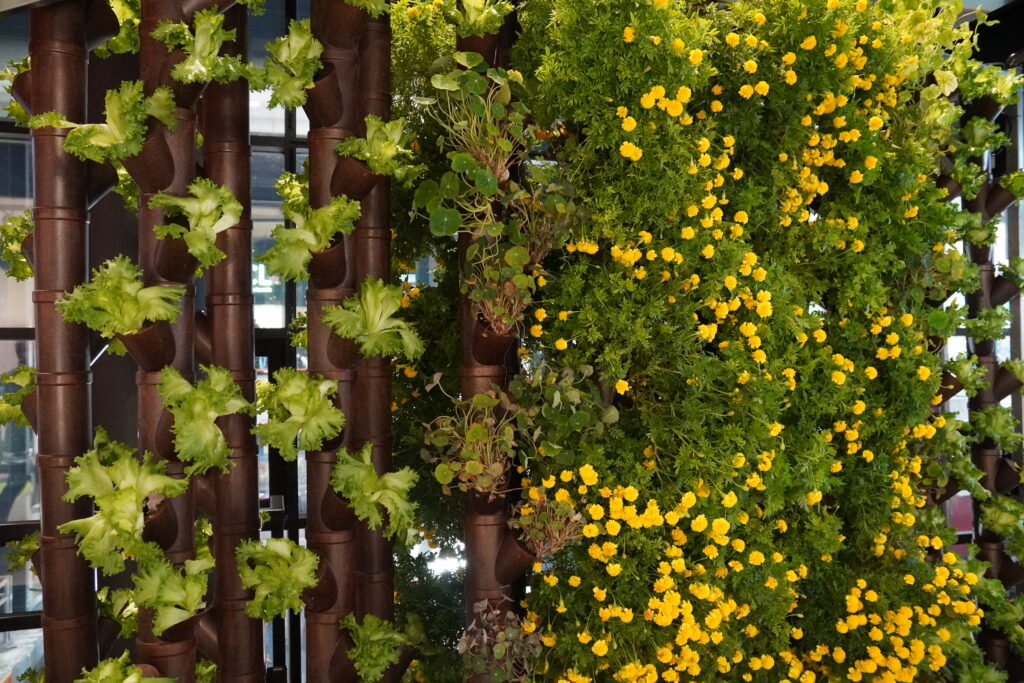
This project began as a hands-on experiment: how could we design and build a simple, efficient, and educational hydroponic system in the shape of a vertical tower? Starting from the basics – pumps, pipes, nutrients, and seedlings – the team tested, measured, and adjusted the setup step by step. From building the idea to our prototype, our main goal was to navigate through challenges in the food sector and try to offer solutions that are feasible and accesible to everyone.
Why Hydroponics?
Hydroponics is a soilless cultivation technique where plants grow in water enriched with essential nutrients. This method offers several advantages compared to conventional soil-based agriculture. Because it does not depend on fertile land, hydroponics can be practiced in urban areas, deserts, rooftops, or indoors -turning almost any environment into a productive growing space.
Vertical hydroponic systems go a step further by optimizing space. A small footprint can host dozens of plants, making it possible to produce fresh, nutritious food in apartments, schools, restaurants, or community centers. This efficiency directly addresses one of the biggest challenges of our time: how to feed growing populations while minimizing pressure on ecosystems.
Water Efficiency
Hydroponic systems use up to 90% less water than soil farming, because water is recirculated and reused rather than lost through runoff and evaporation.
Land-Use Efficiency
While traditional farming requires fertile soil and large tracts of land, hydroponics can be set up in non-arable environments – rooftops, basements, deserts, or even outer space.
Yield and Growth Rates
Plants typically grow 20–50% faster and produce higher yields, as nutrients are delivered directly to their roots in precise amounts.
Pesticides-Free
Growing in controlled systems drastically reduces the need for pesticides and herbicides, since there is no soil to harbor pathogens and weeds.
Year-Round Production
Independent of seasonality or climate, hydroponic systems can run continuously with consistent output.
Local and Fresh
By growing food directly within or close to cities, hydroponics reduces transportation distances, cutting emissions and ensuring fresher, more nutritious produce.
Global food systems face mounting challenges. Agriculture currently accounts for about 70% of global freshwater withdrawals and contributes nearly one-third of greenhouse gas emissions. At the same time, more than 55% of the world’s population lives in cities, a figure projected to rise to 68% by 2050. Urban areas often depend on long and fragile supply chains to access fresh produce, leading to food waste, higher emissions, and vulnerability to disruptions.
Why Now?
Climate change is further stressing traditional farming. Rising temperatures, unpredictable rainfall, and soil degradation threaten crop yields worldwide. Already, one-third of the planet’s soils are moderately to highly degraded due to erosion, salinization, and pollution.
Against this backdrop, technologies like hydroponics are no longer niche experiments but essential innovations. They offer a way to produce food locally, with far less water and land, and to reduce the ecological footprint of feeding cities. By integrating into urban life, hydroponics helps shorten supply chains, cut emissions, and reconnect people with the food they eat.
Addressing Global Challenges
The Sustainable Development Goals (SDGs), also known as the Global Goals, were adopted by the United Nations in 2015 as a universal call to action to end poverty, protect the planet, and ensure that by 2030 all people enjoy peace and prosperity.
The creativity, knowhow, technology and financial resources from all of society is necessary to achieve the SDGs in every context.
This project demonstrates how a vertical hydroponic tower system can serve as a sustainable model for food production in urban contexts.
Experiment and Learn
Test practical solutions for small-scale, soilless cultivation and document the process openly.
Experiment and Learn
Over the course of the past months, the team had been experimenting on a small scale tower.
Promoting Sustainability
Highlight the benefits of water- and space-efficient farming systems in cities like the city of Milano.
Promoting Sustainability
To reach this point of our journey, the team conducted a lot of research on agricultural environmental impact.
Bridge Disciplines
Work towards bringing together agronomy, design, and technology to co-create innovative food solutions.
Bridge Disciplines
The team consists of people from several cultural and professional backgrounds, ideal for knowledge sharing.
What’s next
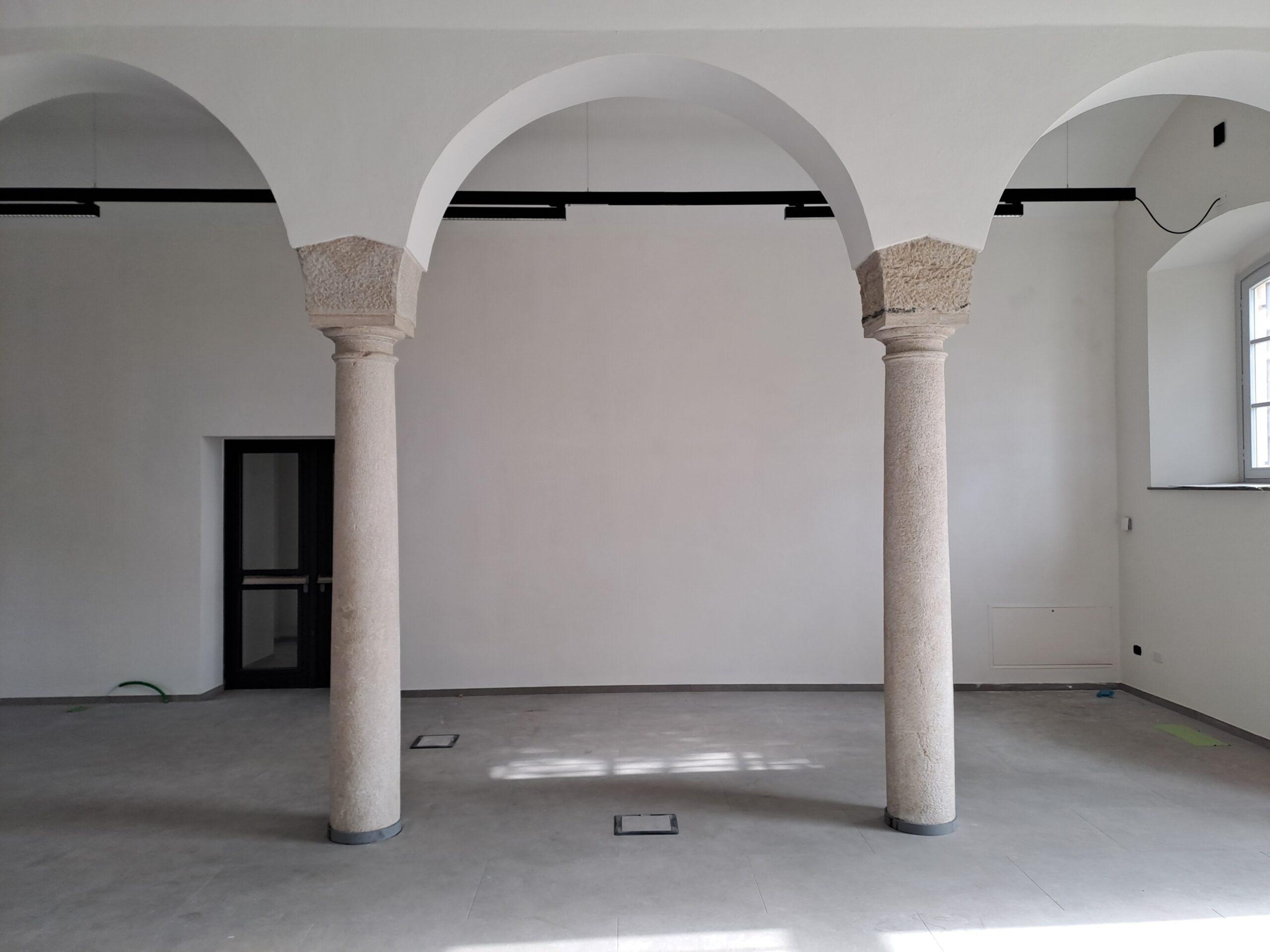
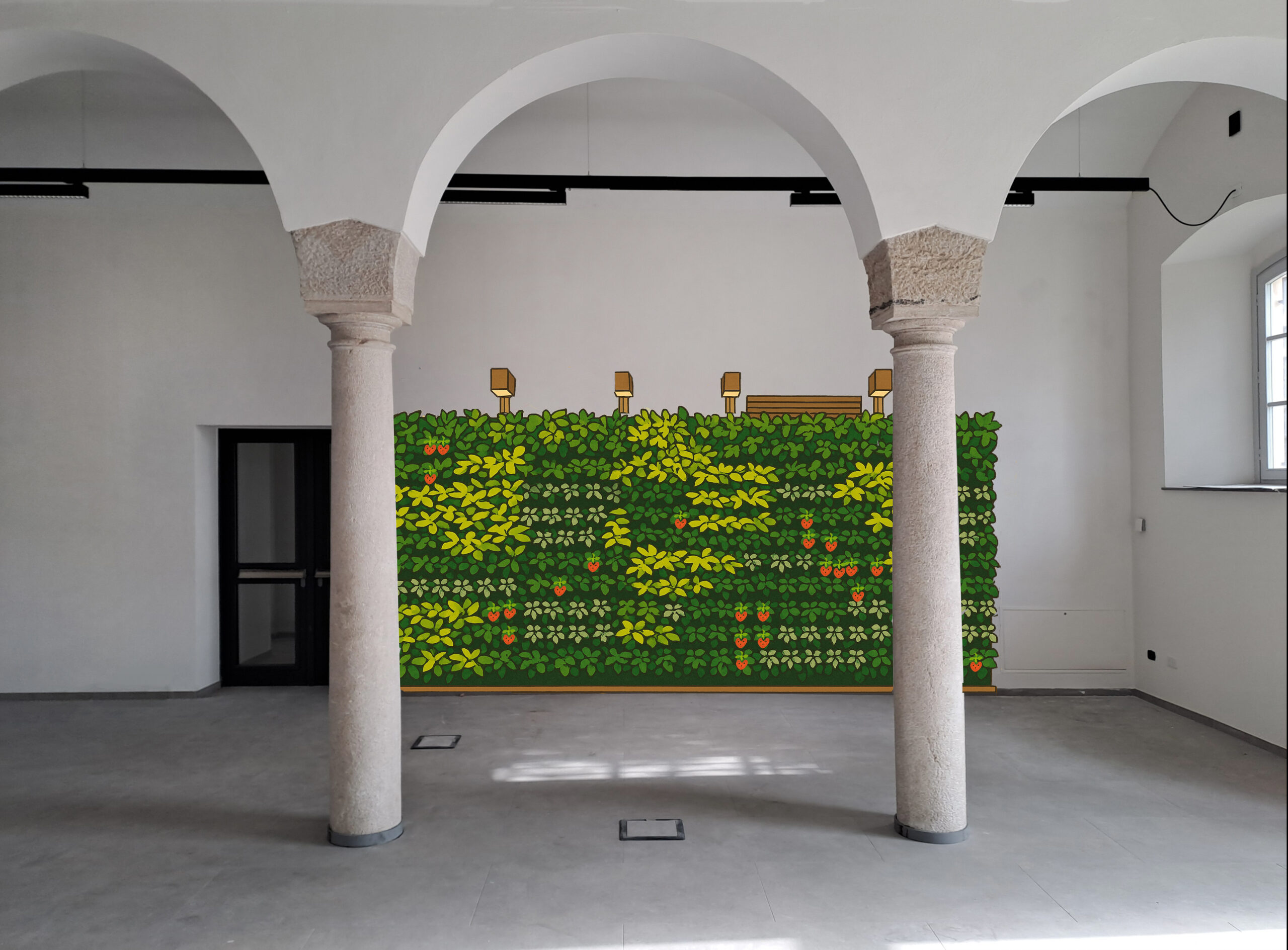
Before
After
In the following months, what started as a pilot prototype in the old Cremona campus of Politecnico di Milano and travelled to Milan as part of the “Food and City” exhibition will be transformed into a hydroponic green wall for the new Cremona campus. Our team will develop a system that this time delivers a different purpose; to serve as a breath of fresh air for students that are seeking out moments of relaxation in the new library space. The setup of this green wall will be slightly changed in comparison to the showcased project as the plants that we will choose will be non-productive but ideal for indoors spaces through purifying the air and creating a welcoming space for students.